
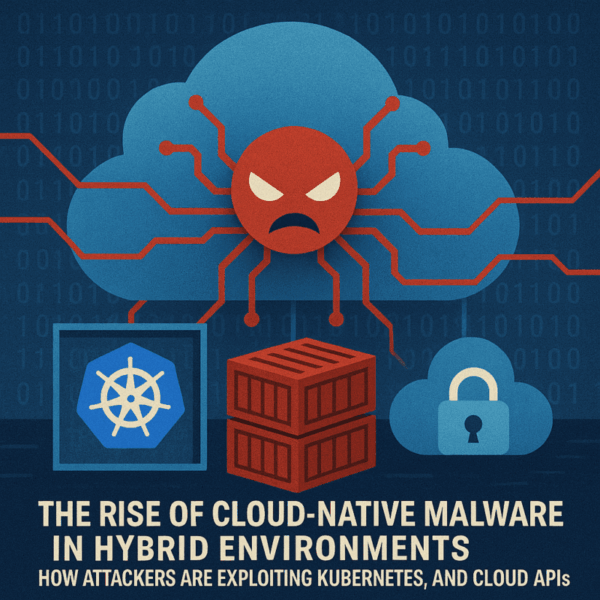
The Rise of Cloud-Native Malware in Hybrid Environments: How Attackers Are Exploiting Kubernetes, Containers, and Cloud APIs

The adoption of hybrid cloud environments has become increasingly common as organizations seek greater agility and scalability. Cloud-native technologies such as Kubernetes, containers, and cloud APIs play a central role in this transformation. However, these technologies have also introduced new security challenges. Attackers are now targeting cloud-native infrastructure, leading to the emergence of sophisticated cloud-native malware designed specifically to exploit these environments.
What Is Cloud-Native Malware?
Cloud-native malware is crafted to target the components and services unique to cloud infrastructure. Instead of focusing solely on traditional endpoints or network devices, this malware operates within cloud platforms, taking advantage of their dynamic, distributed nature. This enables attackers to evade conventional detection methods and inflict significant damage.
Kubernetes as a Growing Attack Surface
Kubernetes, the most widely used container orchestration platform, has become a frequent target for cybercriminals. Misconfigurations in Kubernetes clusters, unsecured dashboards, and vulnerable API endpoints provide attackers with easy access points. Once inside, attackers can deploy malicious containers, run cryptojacking operations, or move laterally to access sensitive data.
A common tactic involves exploiting weaknesses in Kubernetes role-based access control (RBAC). When RBAC settings are not properly configured, attackers can escalate privileges and remain undetected for extended periods. Additionally, attackers use Kubernetes’ automated scaling features to mask malicious activities within legitimate workloads, making it difficult for security teams to identify threats.
Container Vulnerabilities and Supply Chain Risks
Containers introduce their own set of vulnerabilities. Malicious actors often embed malware within container images that, when pulled into production, spread malware throughout the environment. Compromised or malicious container registries serve as distribution points for such malware.
The container supply chain itself is under increasing threat. Attackers inject vulnerabilities or backdoors during the creation or updating of container images. When these compromised images are deployed, malware activates and can compromise the integrity of entire cloud deployments.
Cloud APIs: Critical Points of Exploitation
Cloud APIs provide powerful tools for managing and automating cloud resources. However, if not secured properly, these APIs become critical vulnerabilities. Attackers exploit weak API authentication mechanisms, excessive permission grants, and leaked credentials to gain unauthorized access to cloud accounts. With this access, they can manipulate cloud resources, exfiltrate data, or deploy malware with minimal resistance.
Challenges of Hybrid Cloud Environments
Hybrid environments, which combine on-premises infrastructure with multiple cloud platforms, add complexity to security efforts. Disparate security policies and fragmented monitoring tools create blind spots where cloud-native malware can operate freely. Attackers take advantage of these gaps to move stealthily across environments and avoid detection.
Strategies to Mitigate Cloud-Native Malware
To effectively defend against these evolving threats, organizations should implement a comprehensive security approach that includes:
- Hardening Kubernetes clusters through strict RBAC policies, securing API endpoints, and conducting regular configuration audits.
- Securing container supply chains by using trusted registries, scanning images for vulnerabilities, and applying runtime protection.
- Protecting cloud APIs by enforcing strong authentication methods, applying least privilege access principles, and monitoring API activity for suspicious behavior.
- Centralizing monitoring and visibility with tools that provide unified security oversight across hybrid environments.
- Continuous training for DevOps and security teams on emerging cloud-native threats and security best practices.
Conclusion
As cloud-native technologies continue to dominate enterprise infrastructure, attackers will increasingly focus on exploiting these platforms. Recognizing the unique risks associated with Kubernetes, containers, and cloud APIs in hybrid environments is essential to building effective defenses. The rise of cloud-native malware represents a significant shift in cybersecurity, requiring organizations to balance innovation with rigorous security.
Stay with Cyber News Live for ongoing coverage, analysis, and expert insight into the technologies shaping the future of cybersecurity.
By Sam Kirkpatrick, an Information Communication Technology student at the University of Kentucky and intern at Cyber News Live.