
Smart People Are Easier to Fool Than They Think, Mentalist Warns Intelligence Can Become a Liability

Being intelligent does not guarantee good decisions. In fact, critical thinking can become even more important for intelligent people because confidence in their own reasoning may make them less likely to question what they believe.
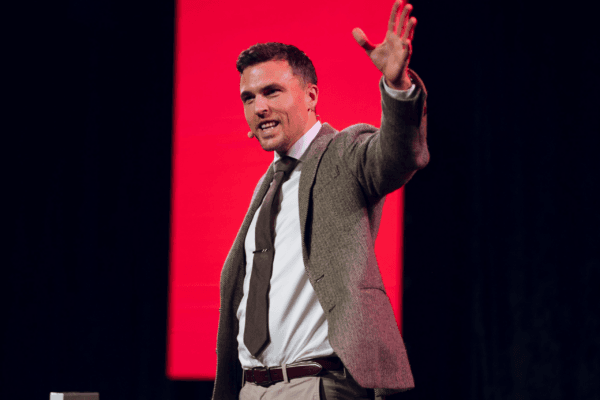
According to Australian mentalist, TEDx speaker and keynote expert Andy Nunn, intelligence can sometimes make people more vulnerable. Smart people, he argues, can be particularly good at convincing themselves they are right.
After more than 25 years studying attention, persuasion and human behaviour through mentalism, combined with more than a decade coaching leaders, Nunn says some of life’s biggest mistakes happen because people trust their own thinking too much.

“We like to believe smart people make smart decisions, but that’s simply not true,” Nunn said.
“Highly intelligent people still fall for scams, make poor investments, hire the wrong people, stay in unhealthy relationships and make costly business decisions. The biggest risk isn’t stupidity, it’s believing you’re too smart to be fooled.”
Critical Thinking Starts With Understanding How Your Brain Tricks You
Nunn said the human brain constantly relies on assumptions, biases and mental shortcuts, often without us realising. These shortcuts can influence how people interpret evidence, assess risk and make decisions.
“We notice evidence that supports what we already believe and conveniently ignore information that challenges us,” Nunn said.
“As a mentalist, I don’t control people’s minds. I understand where attention is going, what assumptions people are making and how easily perception can be manipulated. Those same vulnerabilities influence business, leadership, relationships and everyday life.”
Intelligence can also create another problem: overconfidence. According to Nunn, people can reach an emotional conclusion first and then use their reasoning skills to justify it.
“We can make an emotional decision first and then use our intelligence to build a sophisticated argument for why it was right,” he said.
“Confidence is not evidence and certainty doesn’t mean you’re right.”
AI Makes Critical Thinking More Important Than Ever
Artificial intelligence, misinformation and manipulated online content are changing how people judge what is real. Nunn believes this environment has made discernment and critical thinking increasingly important.
“We live in a world where seeing is no longer necessarily believing,” Nunn said.
“We’re being bombarded with information designed to attract attention, reinforce beliefs and provoke reactions.
“The people who thrive won’t necessarily be those with the highest IQ. They’ll be the people who know how to question information, challenge their assumptions and recognise when bias is influencing what they believe.”
As AI-generated content becomes easier to produce and harder to distinguish from authentic material, the ability to question information may matter as much as the ability to find it.
Critical Thinking: Catch It, Challenge It, Change It
Nunn uses a simple three-step framework in his keynotes to help people interrupt automatic thinking: Catch it. Challenge it. Change it.
“First, catch it. Before making an important decision, pause and notice the story you’re telling yourself, the assumption you’re making or the emotion driving your reaction,” Nunn said.
“Then challenge it. Ask yourself: ‘What evidence could prove me wrong?’ That question forces you to consider that your thinking may be flawed.
“Finally, change it. Actively seek opinions and evidence that challenge your thinking rather than surrounding yourself with information that reinforces it.”
Nunn said the framework can apply across leadership, recruitment, investments, relationships and everyday decisions. Rather than assuming the first conclusion is correct, the approach encourages people to actively look for evidence that challenges it.
“The people who make the best decisions aren’t always right. They’re willing to question themselves before they act,” Nunn added.
Critical Thinking Also Means Knowing When to Stop Overthinking
Intelligence can create another obstacle when analysis becomes a substitute for action. Nunn said capable people can spend so much time examining a problem that they struggle to move forward.
“We can analyse something so extensively that thinking becomes a substitute for doing,” he said.
“People wait until they’re certain, confident or completely ready. The problem is that moment may never arrive.”
Drawing on his experiences with addiction recovery and ultra-endurance sport, Nunn uses his GO method to help people move through fear and discomfort.
“The G is for ground yourself. Instead of fighting the feeling, acknowledge it: ‘I feel fear, and that’s okay’,” Nunn said.
“The O is for one tiny step. Ask yourself: ‘What is the smallest action I could take right now?’
“You don’t need to solve the entire problem. You just need to take the next step.”
Nunn said the same philosophy has helped him tackle extreme endurance challenges.
“A 200-mile race feels impossible if you’re standing at the starting line thinking about every kilometre ahead. You move forward one step at a time,” he said.
“The same principle applies in business and life. Big changes often begin with very small actions.”
Humility and Critical Thinking Can Become a Competitive Advantage
For Nunn, one of the most valuable qualities people can develop is the willingness to accept that their perception may be wrong.
That willingness matters in business and leadership, where confidence can easily be mistaken for accuracy. It also matters online, where misinformation, AI-generated material and persuasive content can exploit assumptions before people realise what is happening.
“My keynotes aren’t about fooling people, they’re about helping people experience their own blind spots,” Nunn said.
“When you experience how easily attention can be directed and assumptions exploited, you realise none of us is immune to bias.
“That creates humility, and humility makes us better thinkers, leaders and decision-makers.
“I don’t want audiences leaving believing I’m clever. I want them leaving asking better questions about themselves.
“Catch it, challenge it, change it. Ground yourself and take one tiny step. Sometimes the smartest thing you can do is accept that you might be wrong.”
About Andy Nunn
Andy Nunn is an Australian mentalist, TEDx speaker, keynote presenter and critical-thinking advocate who uses psychological illusion, behavioural insights and lived experience to explore how humans think, make decisions and respond to pressure.
Performing magic since childhood and professionally since 2019, Andy has worked with organisations including Google, Amazon, EY and Ralph Lauren and now delivers approximately 50 keynote presentations each year. His keynote experiences include The Human Advantage, Wonderfully Uncomfortable and Seeing Isn’t Believing, covering leadership, bias, change, resilience, misinformation and critical thinking.
Andy combines more than 25 years of experience in mentalism with more than a decade coaching leaders, his journey through addiction and five years of sobriety, and extraordinary endurance challenges including the 200-mile Dragon’s Back Race. Based on the Central Coast of NSW, he is currently writing a book, developing a critical-thinking program for high school students and building his podcast and broader thought-leadership platform.
Stay Informed With Cyber News Live
Cyber threats are constantly evolving, and staying informed is critical to protecting your organization.
Follow Cyber News Live for the latest cybersecurity news, threat intelligence, expert analysis, and practical guidance to help strengthen your cyber defenses.